Are We Here?
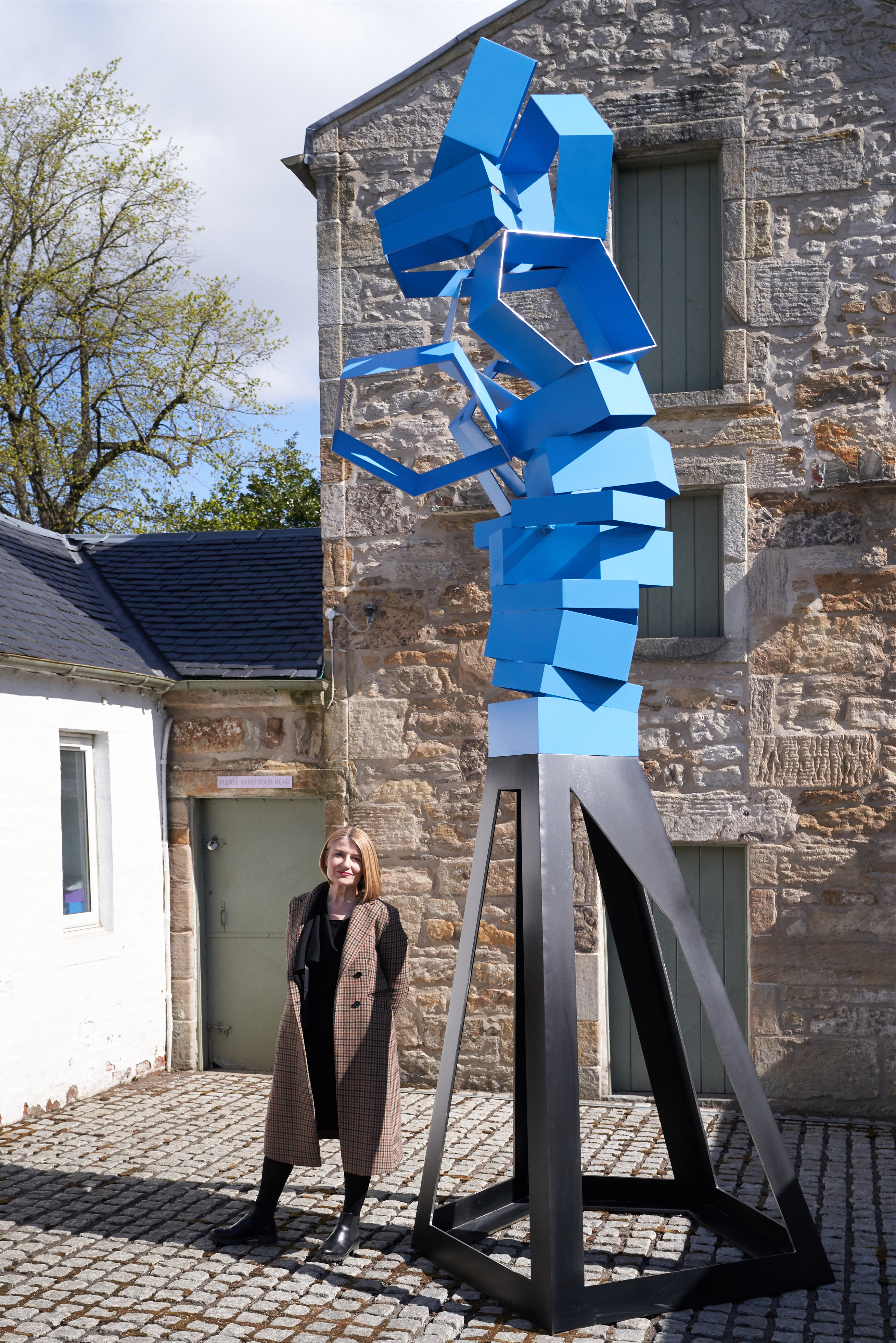
Are We Here (2021), a site-based, 4.6-meter-tall sculpture by Kevin Callaghan commissioned by Sky Arts on the occasion of the new series Landmark, explores the notion of utopia and our proximity to it. With an ongoing interest in geometry and the potential for multiple realities, Callaghan invites viewers into a future-minded meditation on hope and potentiality via Are We Here.
Five is the foundational integer of this towering stainless steel sculpture, starting with a pentagonal plinth energetically tilted to one side, narrowing to a point midway where an explosion of five-sided shapes proliferate and seem to climb atop one another. Are We Here thus blooms from the constraints of set parameters—a single base, a building block of five-sided shapes—into a teeming, rhizomatic cluster ecstatically reaching for the sky.
Inspired in part by the utopian philosophy of Ernst Bloch, the distinct registers in Are We Here—the black plinth contrasted with the profusion of blue pentagons above—echo the universe’s trajectory from its primordial beginnings to its utopian end point. Bloch conceived of this transition as one driven by our “hunger” for that which is not-yet-become, but which does exist as a concrete possibility that we might will into existence. Indeed, a palpable hunger for a place that exists in potentia appears to drive the upward thrust of Callaghan’s Are We Here: This hunger reaches a fever pitch at the pinched center of this sculpture, before releasing a burgeon of thought and possibility that could seemingly continue its expansion into infinity.
Inspired in part by the utopian philosophy of Ernst Bloch, the distinct registers in Are We Here—the black plinth contrasted with the profusion of blue pentagons above—echo the universe’s trajectory from its primordial beginnings to its utopian end point. Bloch conceived of this transition as one driven by our “hunger” for that which is not-yet-become, but which does exist as a concrete possibility that we might will into existence. Indeed, a palpable hunger for a place that exists in potentia appears to drive the upward thrust of Callaghan’s Are We Here: This hunger reaches a fever pitch at the pinched center of this sculpture, before releasing a burgeon of thought and possibility that could seemingly continue its expansion into infinity.
The artist also spurs us to ask the titular question, “Are we here?” It’s a question that suggests we are on a journey, and, in addition to hunger for our destination, conjures hope—hope for real freedom and space to realize our multitude of potentialities. If “here” is not yet utopia, it is at least a space where we might imagine, hope for, and build our future.
Utopia and potentiality have permeated Callaghan’s practice, which spans ceramics, painting, photography, and installation. Are We Here is the progenitor of the artist’s new series of sculptural interrogations of space and form; and, as the first and largest of this endeavor, Are We Here punctuates Callaghan’s work and represents a turning point onto new possibilities.
Callaghan holds a masters form the Royal College of Art in London. He has exhibited his work widely, most recently with a solo exhibition GOMA Gallery of Modern Art in Waterford, Ireland. In the summer of 2021, he was an artist in residence at the Irish Cultural Centre in Paris, and his next solo exhibition will be held at Stallan-Brand Gallery in Glasgow in the fall of 2021.
Utopia and potentiality have permeated Callaghan’s practice, which spans ceramics, painting, photography, and installation. Are We Here is the progenitor of the artist’s new series of sculptural interrogations of space and form; and, as the first and largest of this endeavor, Are We Here punctuates Callaghan’s work and represents a turning point onto new possibilities.
Callaghan holds a masters form the Royal College of Art in London. He has exhibited his work widely, most recently with a solo exhibition GOMA Gallery of Modern Art in Waterford, Ireland. In the summer of 2021, he was an artist in residence at the Irish Cultural Centre in Paris, and his next solo exhibition will be held at Stallan-Brand Gallery in Glasgow in the fall of 2021.
Rare
Earthen
-ware
Rare Earthenware - Toby Smith .
Unknown Fields Division
with Ceramicist/Artist Kevin Callaghan, 2014–5
black stoneware and radioactive mine tailings
©Toby Smith
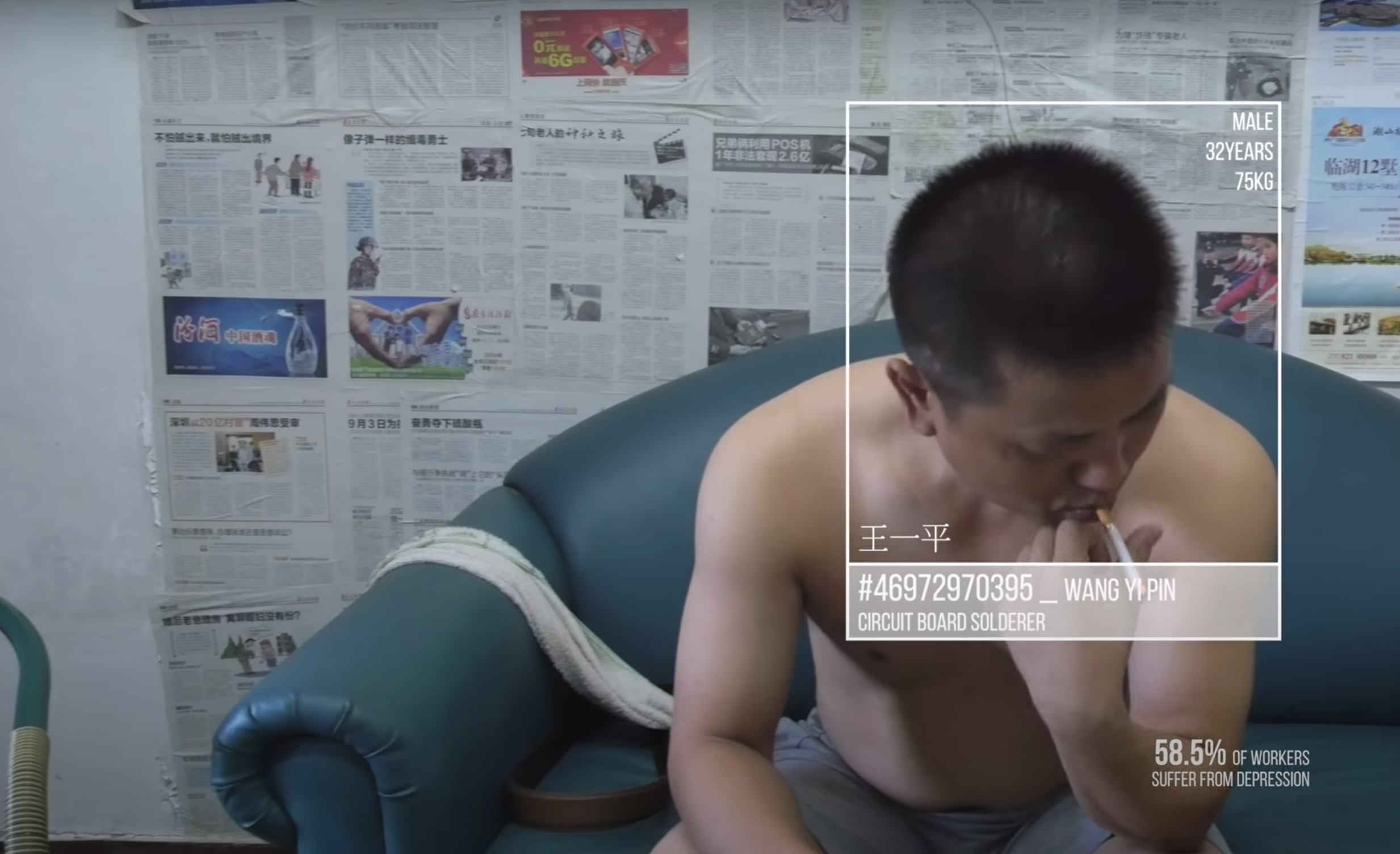
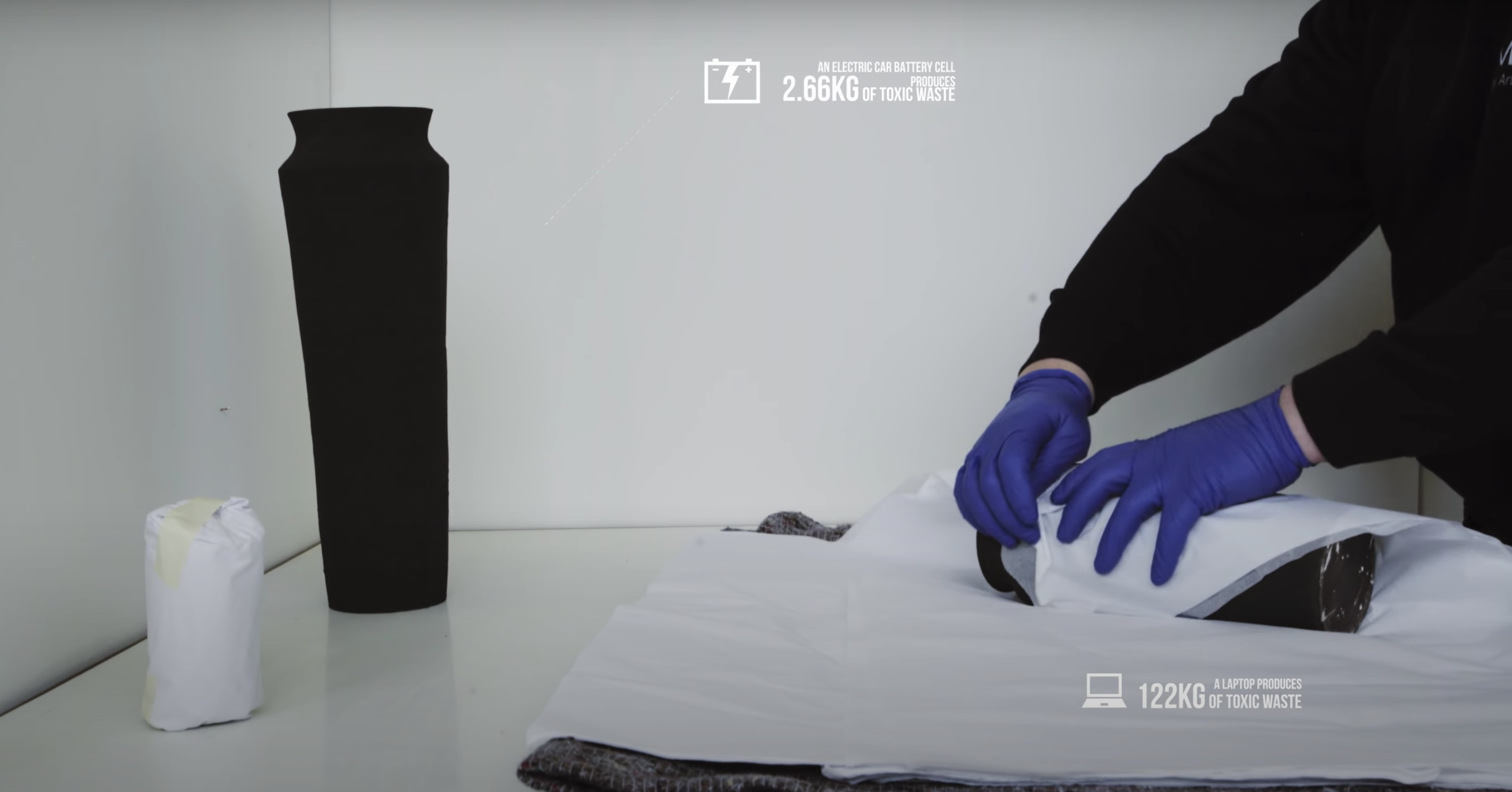
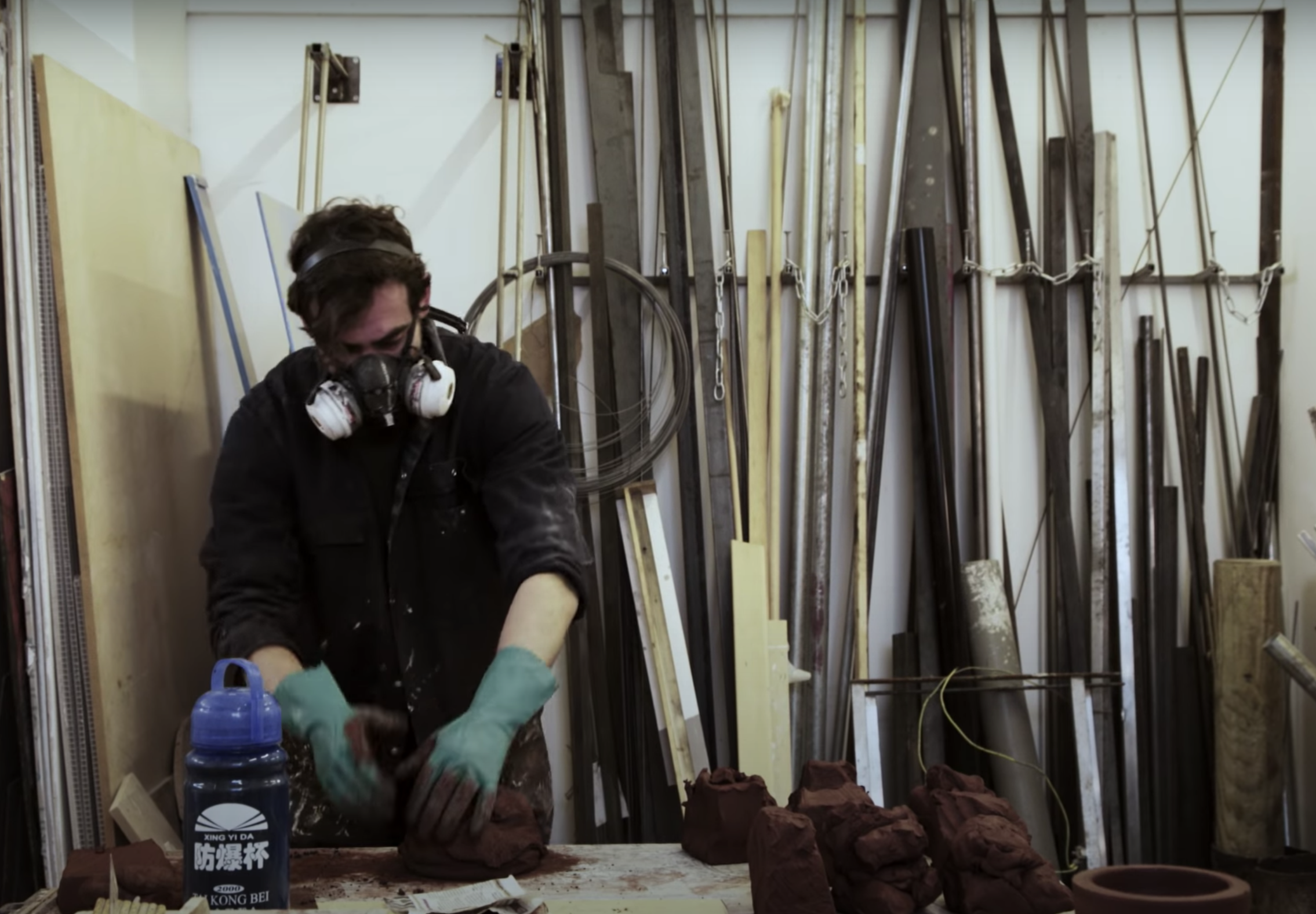
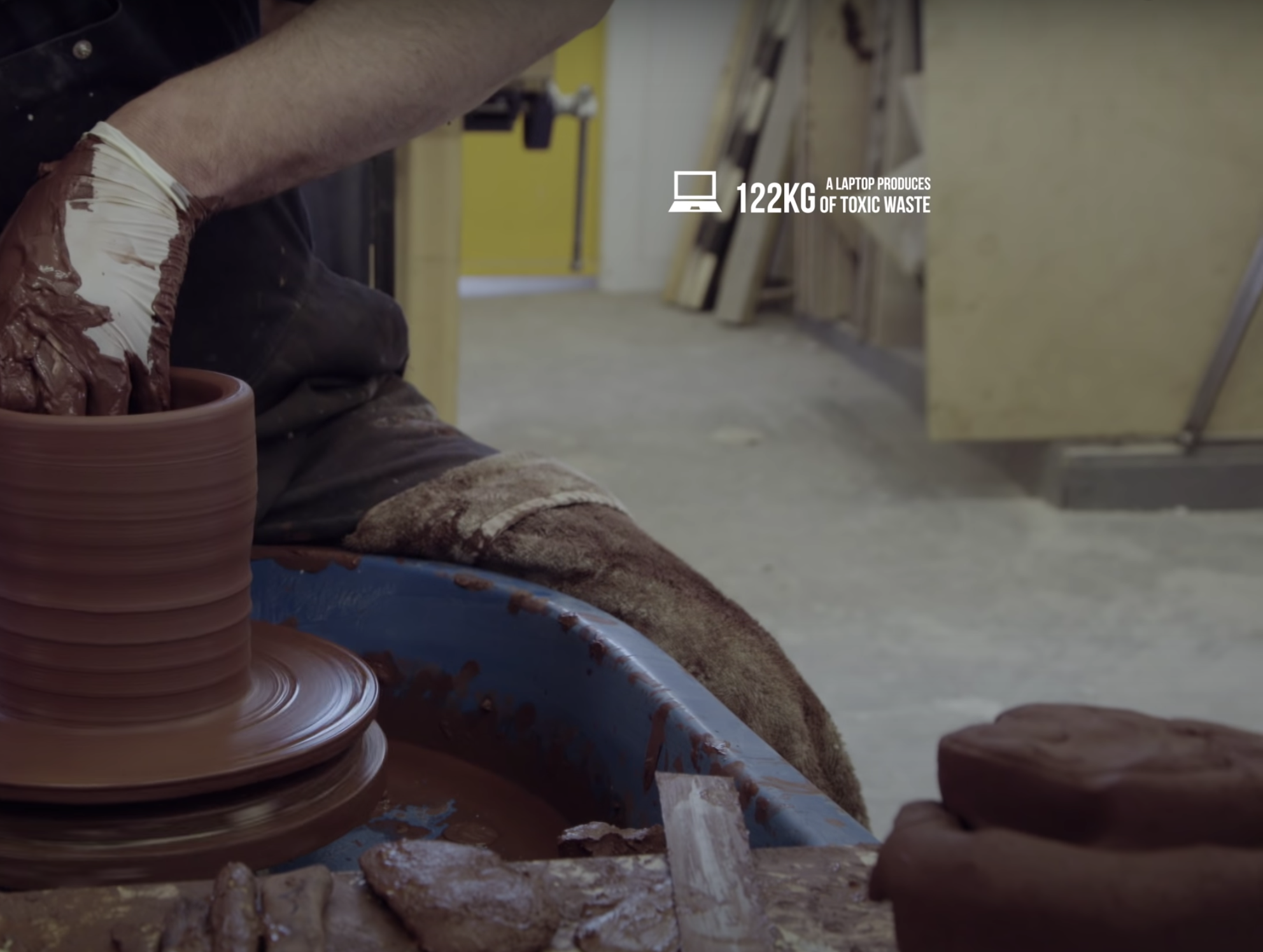
While journeys to extraordinary places are the cornerstone of luxury travel, this project follows more well-conceale journeys taking place across global supply chains. It retraces rare earthelements, which are widely used in high end electronics and green technologies, to their origins. The film, developed with photographer Toby Smith, documents their voyage from container ships and ports, wholesalers and factories, back to the banks of a barely-liquid radioactive lake in Inner Mongolia, where the refining process takes place.
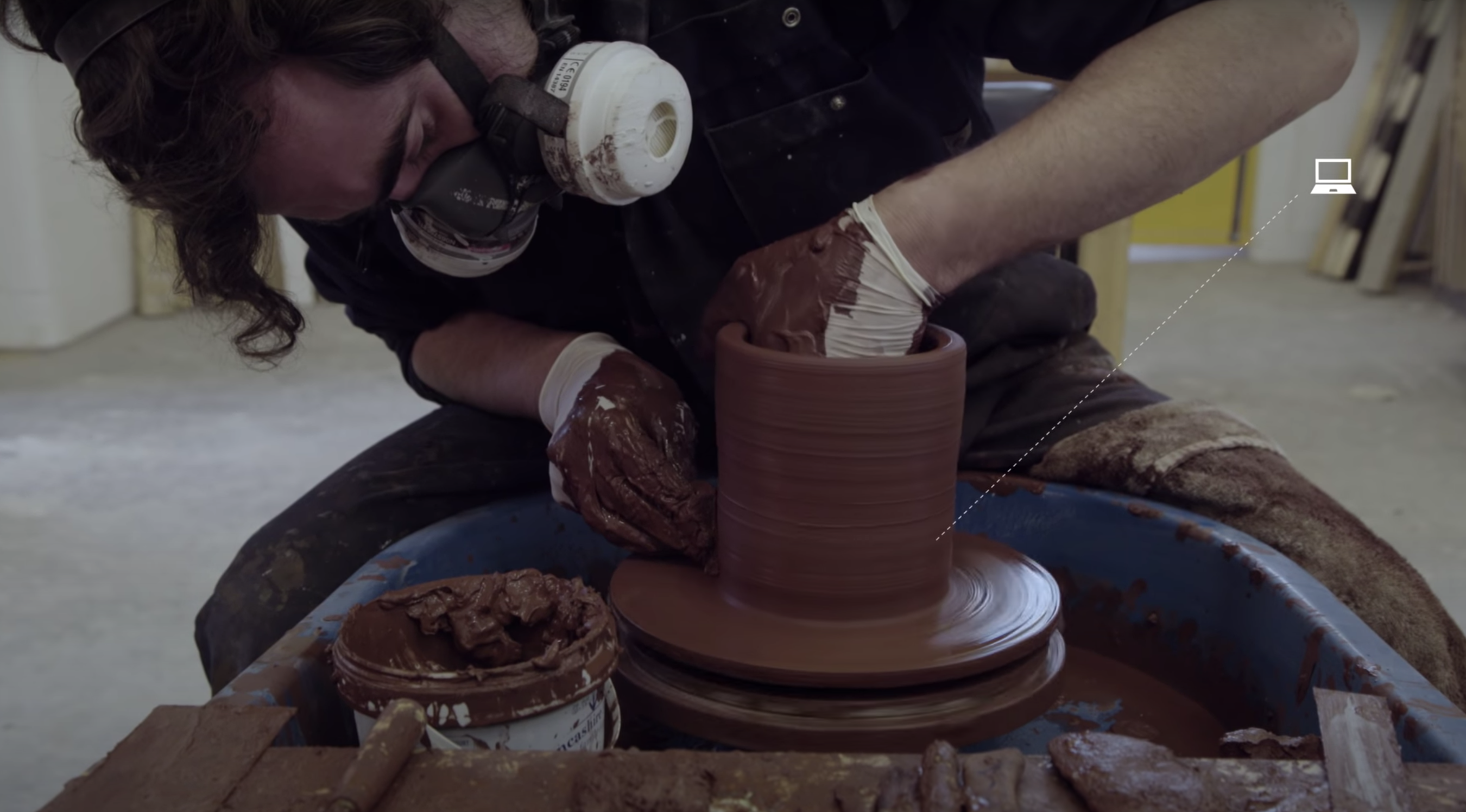
Unknown Fields Division, in collaboration with Kevin Callaghan, have used mud from this lake to craft a set of three ceramic vessels. Each is sized in relation to the amount of waste created in the production of three items of technology:
- a smartphone
-a featherweight laptop
- the cell of a smart car battery
The resulting film and 3 vases were displayed at
the V&A in April 2015.
- a smartphone
-a featherweight laptop
- the cell of a smart car battery
The resulting film and 3 vases were displayed at
the V&A in April 2015.


Back of Society
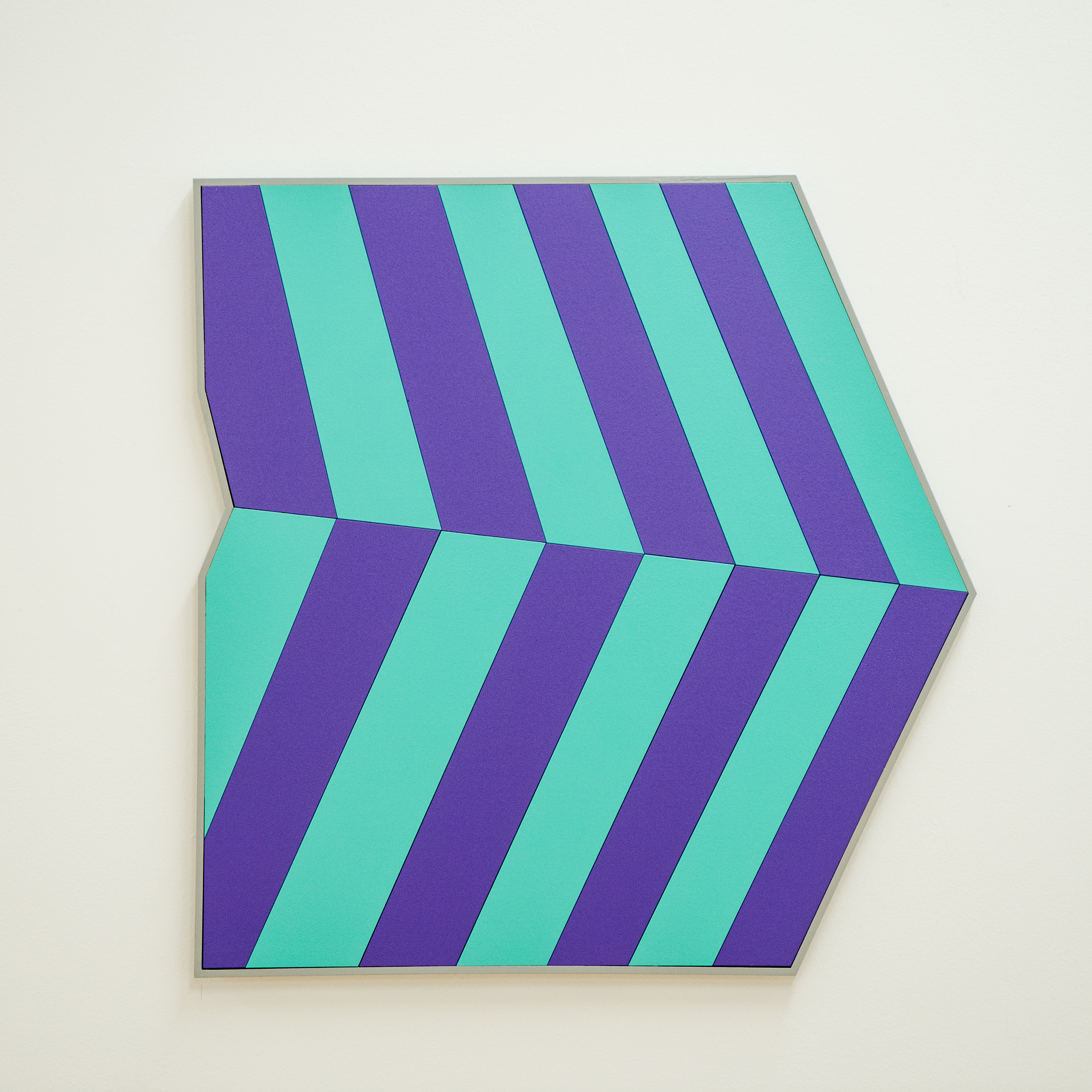
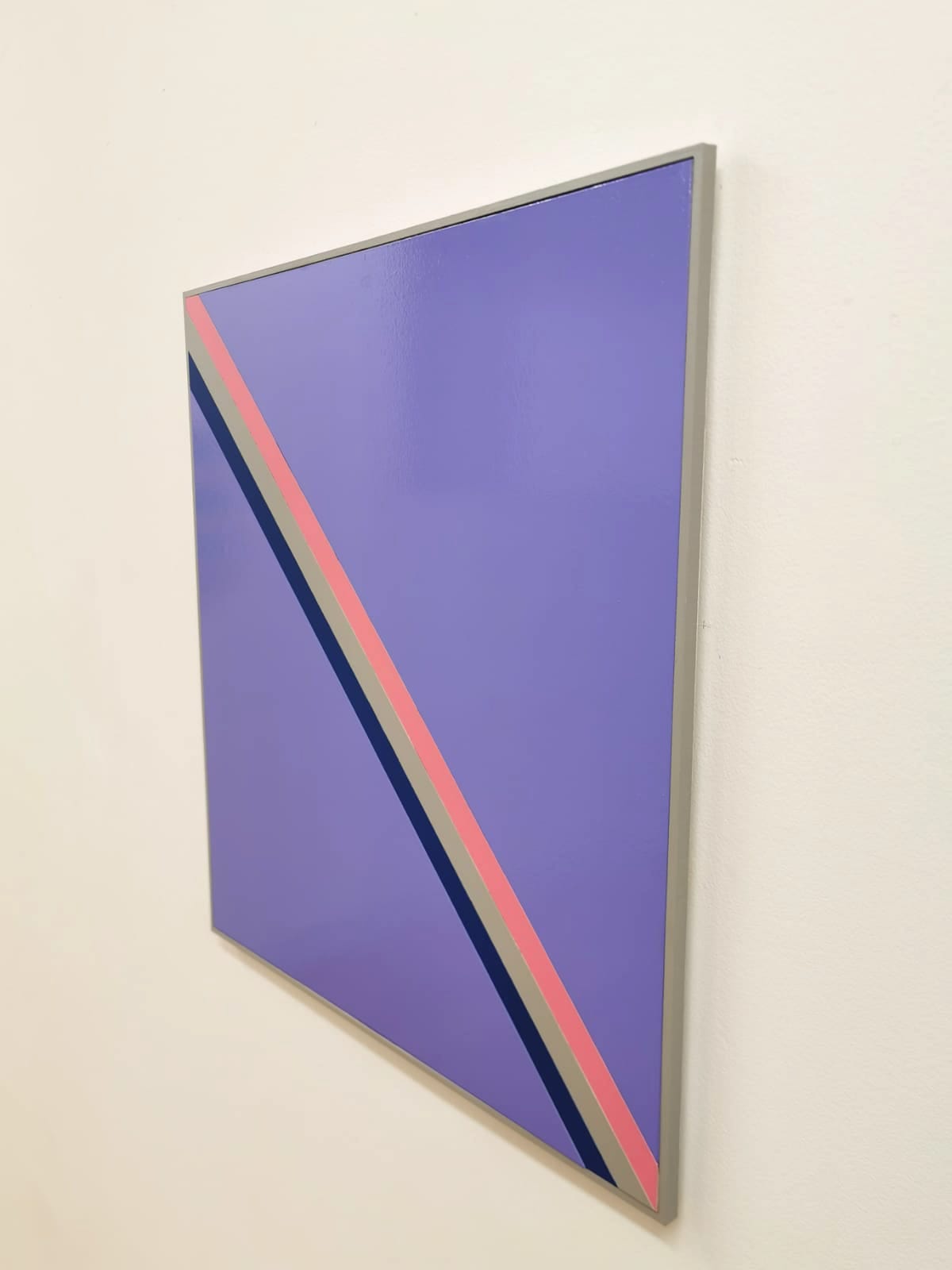
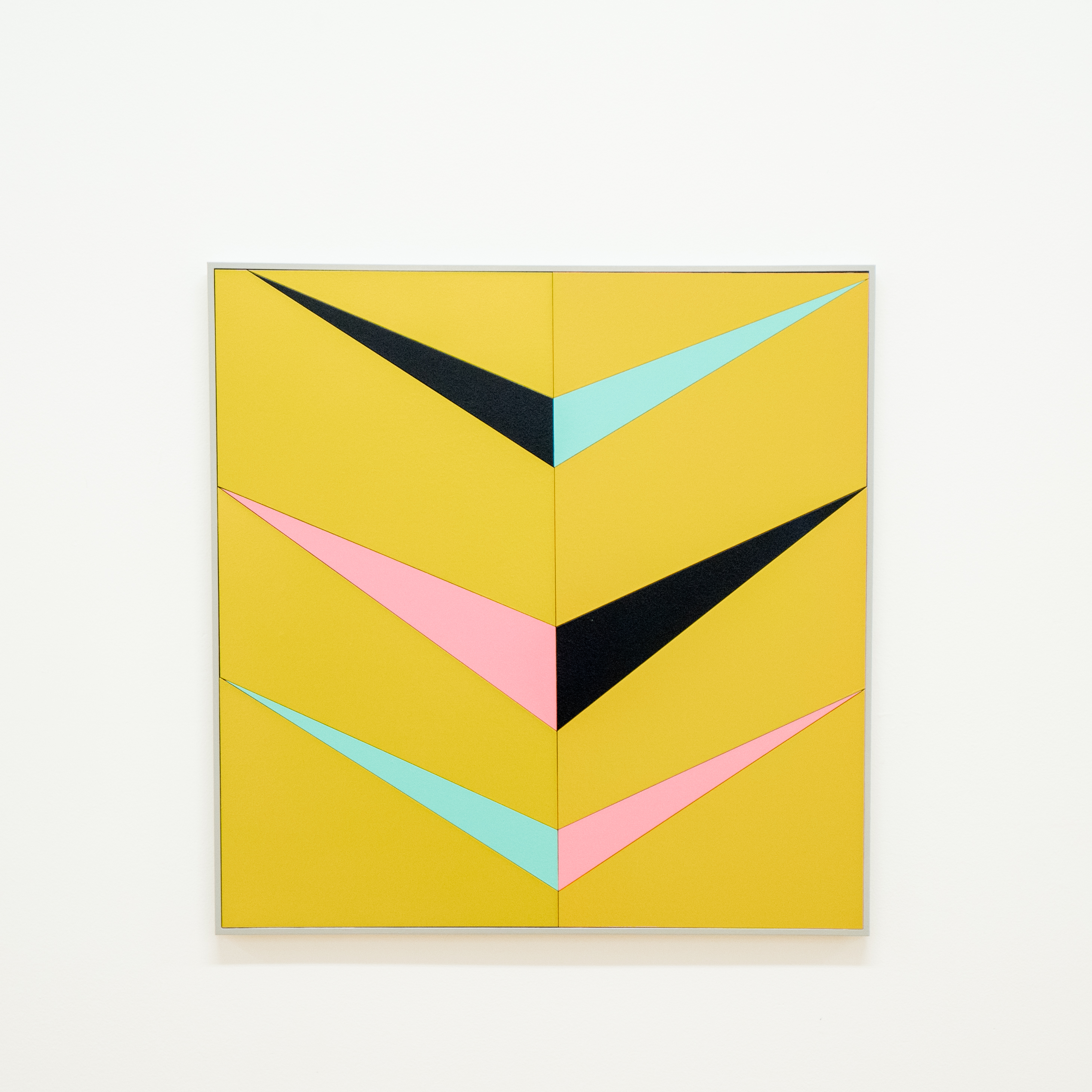
Wood + Paint.
These geometric paintings are made from wood and paint, each piece is coloured differently, with combinations of intersecting parallel lines. By merging geometrical patterns and different chromatic ranges, these wall pieces are intended by the artist as an exploration into form and colour to create a new aesthetical singularity.





New Form
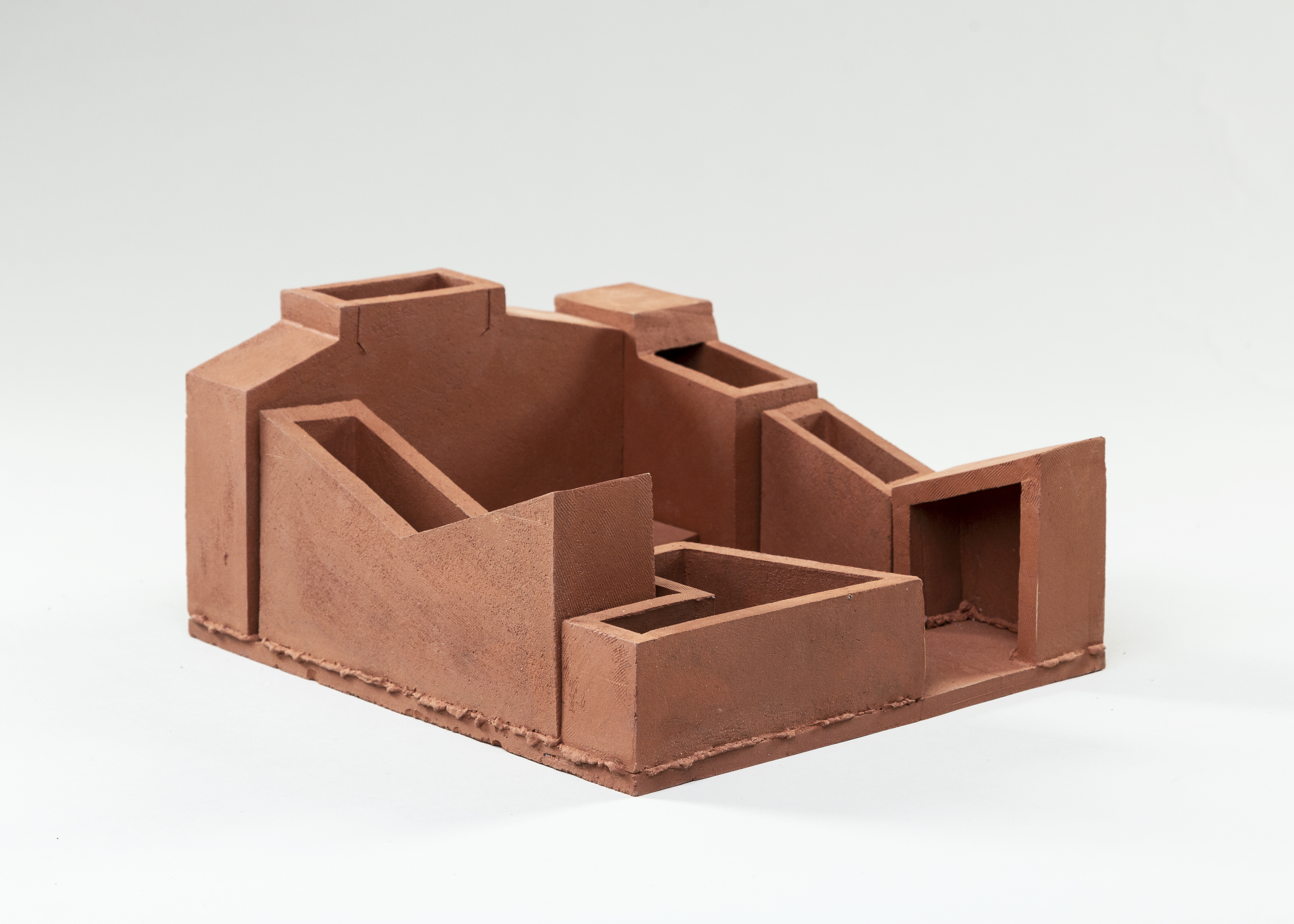
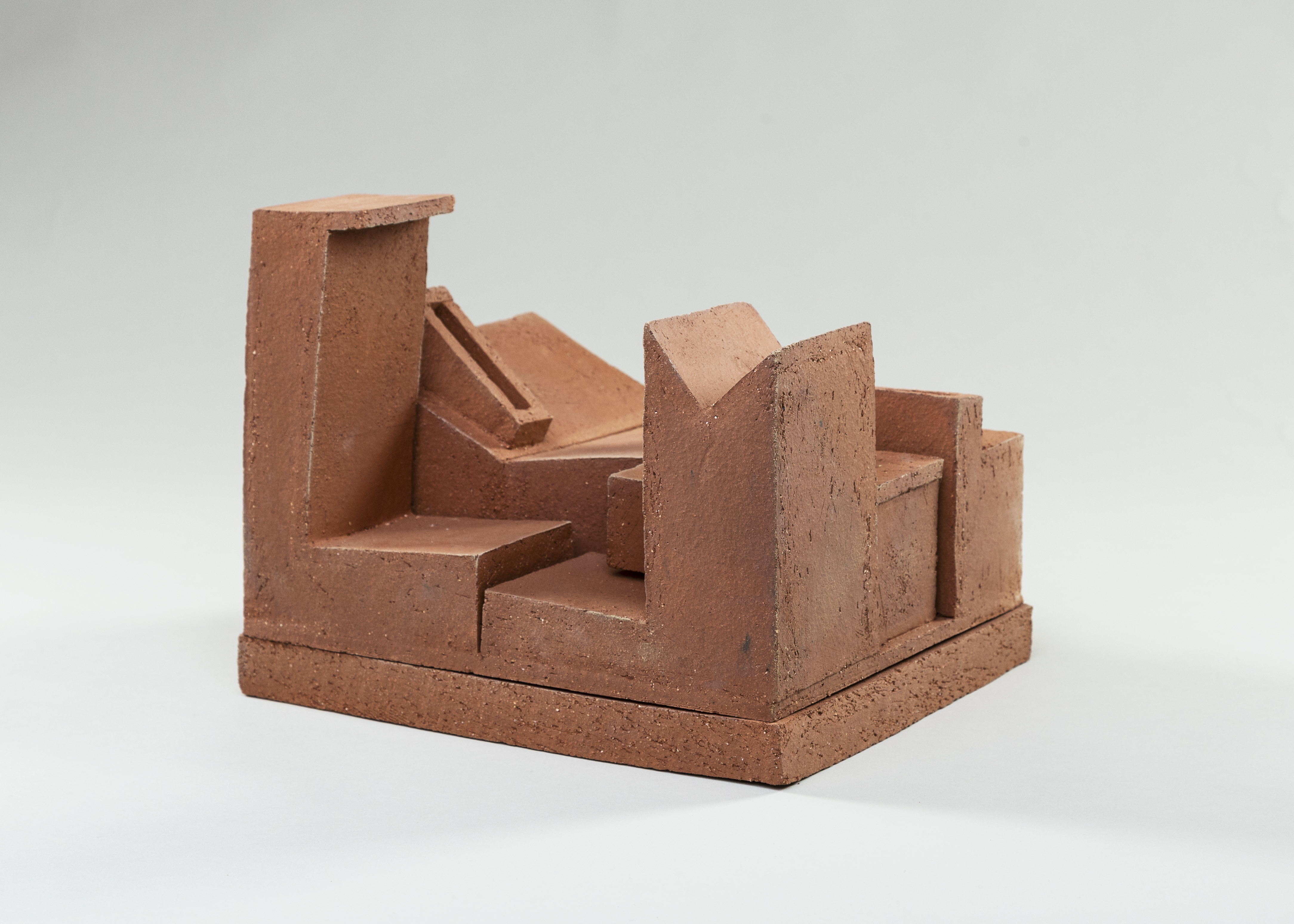
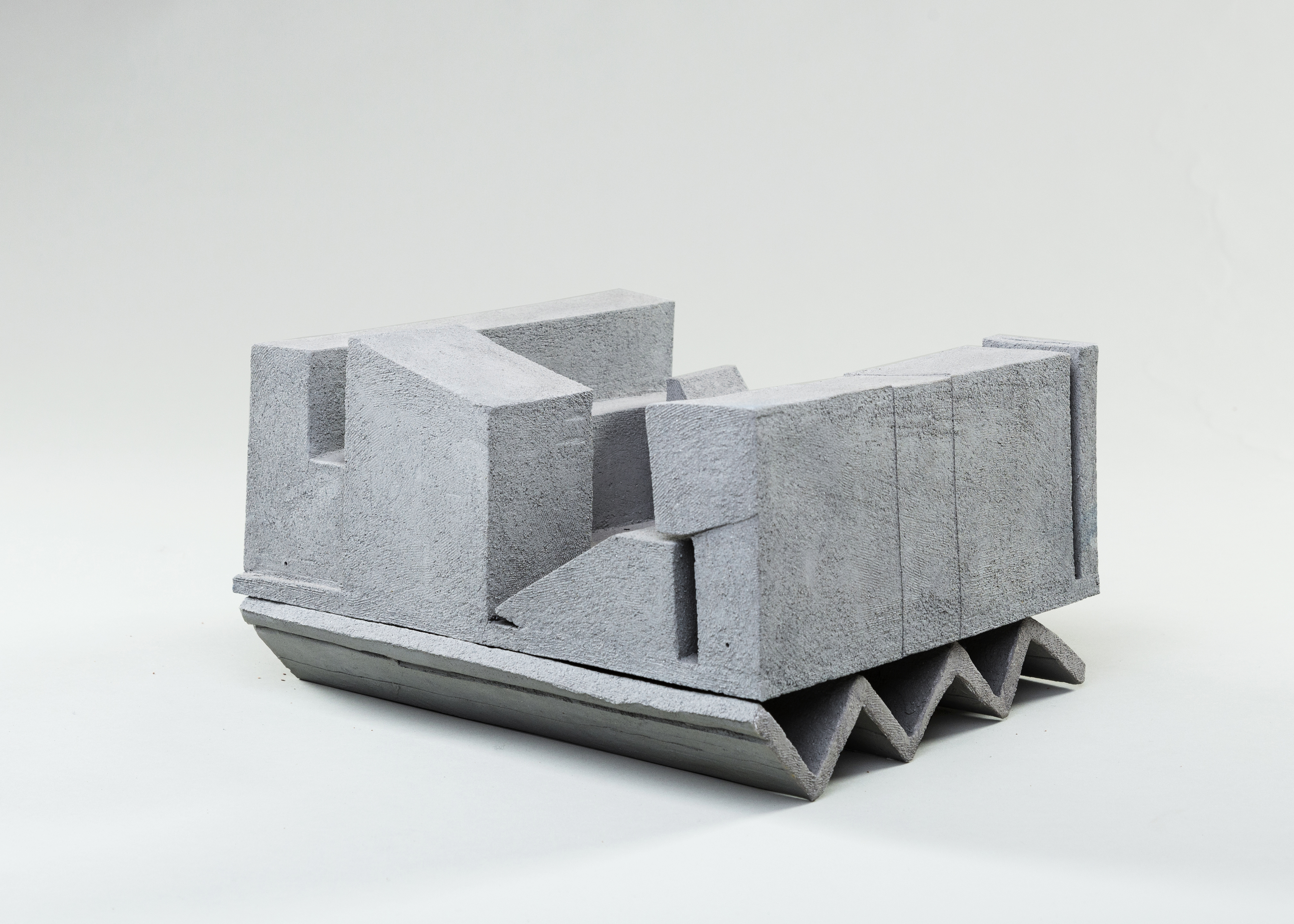
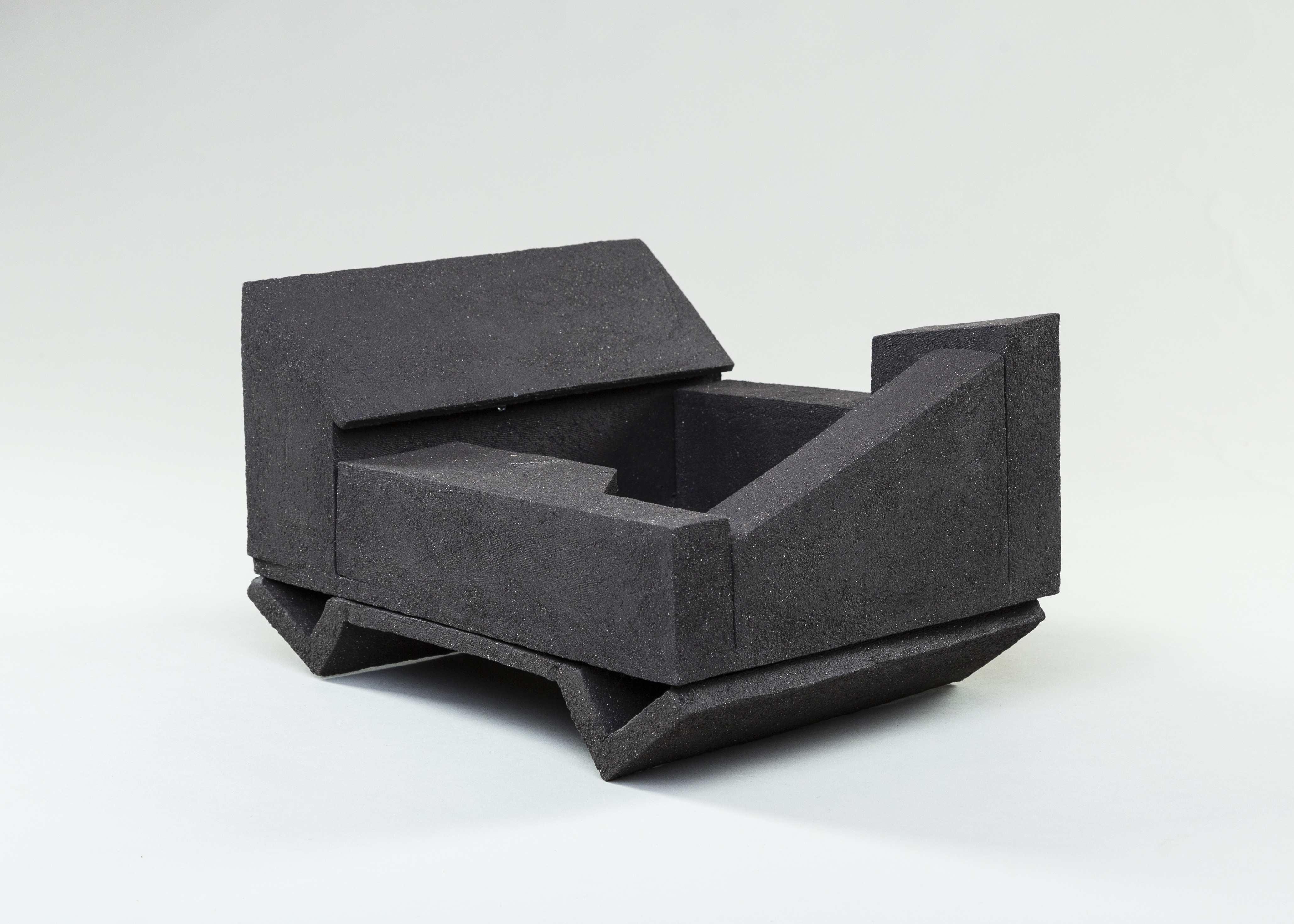
The perception and imagination of the viewer becomes part of the art in New Form, a recent series of ceramic sculptures by Kevin Callaghan. From a distance, one might see these works as the walls of a village, and imagine these structures as the potential mock-ups for a utopian city, or perhaps as otherworldly buildings that defy practicality. Up close, these small sculptures—each of which is constructed within the constraints of its 30-by-30 centimeter base — draw the viewer in, with porous texture and unexpected nooks where the mind can wander.
In their modular construction and geometric forms, Kevin’s works are reminiscent of Minimalism, and similarly call upon the viewer to appreciate the fundamental physical relationships between planes, materials, light, and shadow. Kevin has exhibited his work widely, with a recent exhibition of New Form at GOMA Gallery of Modern Art in Waterford, Ireland, and has just completed a residency at the Irish Cultural Centre in Paris.
Text: Bethney Fincher (Saatchi Art)
Photos: Malcolm McGettigan




soaring
away
from
home